
14F-6, No. 79, Sec. 1, Xintai 5th Rd, Xizhi Dist., New Taipei City, 221432 Taiwan (R.O.C.)
Tel: 886-2-2698-3877
Fax: 886-2-2698-4089
email : [email protected]

Focusing on AI Server Power Supplies, Robotics and Unmanned Vehicle Motors, and LEO Satellites to Build an Industry–Academia Innovation Hub for Advanced Technologies
October 14, 2026
[Tainan, Taiwan] As generative AI continues to advance rapidly, power demands from AI data centers are steadily increasing, while technologies such as humanoid robots and low Earth orbit (LEO) satellites are accelerating toward real-world applications. Power systems are evolving toward higher power density, higher operating frequencies, and greater efficiency. From individual components to power modules, improving product performance and reliability depends not only on design, but also on precise measurement instruments and practical engineering expertise to verify functionality and quality.
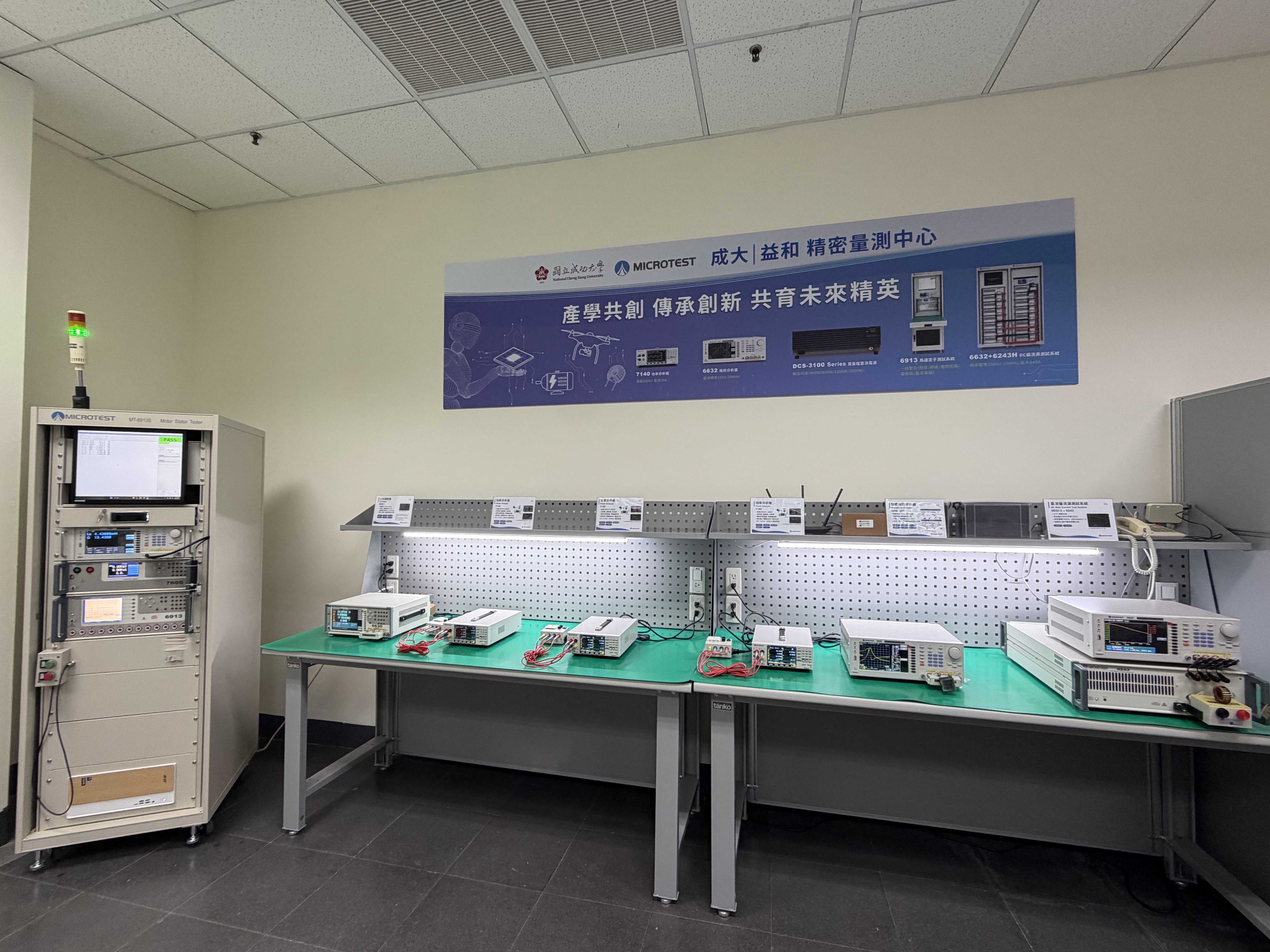
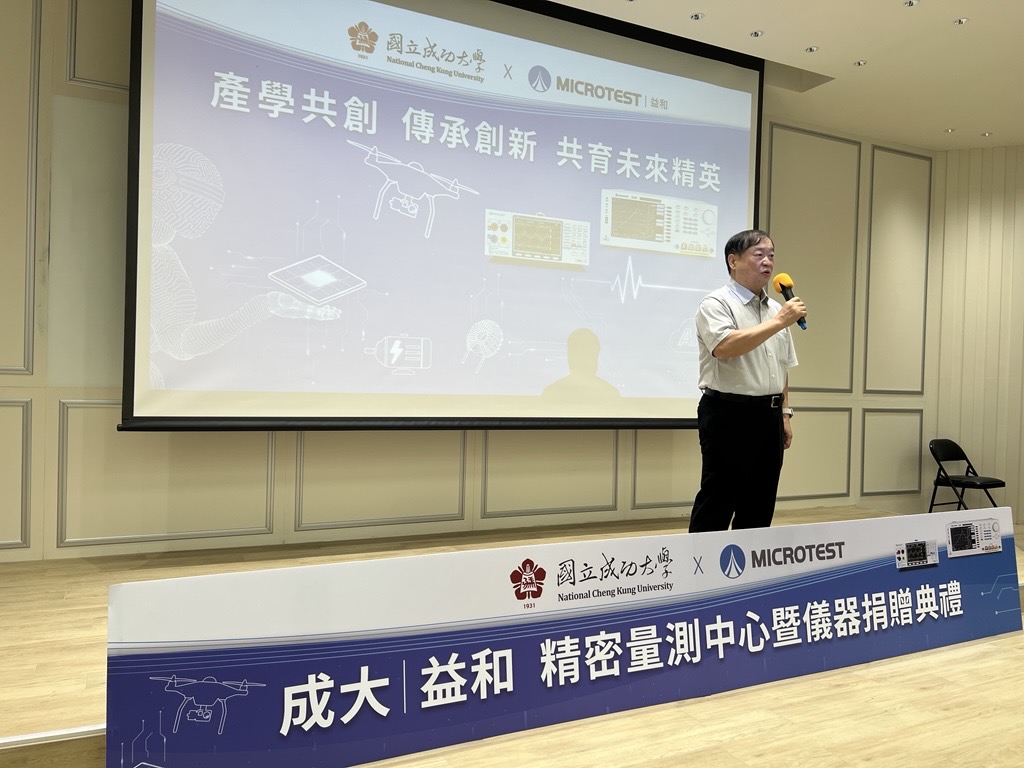
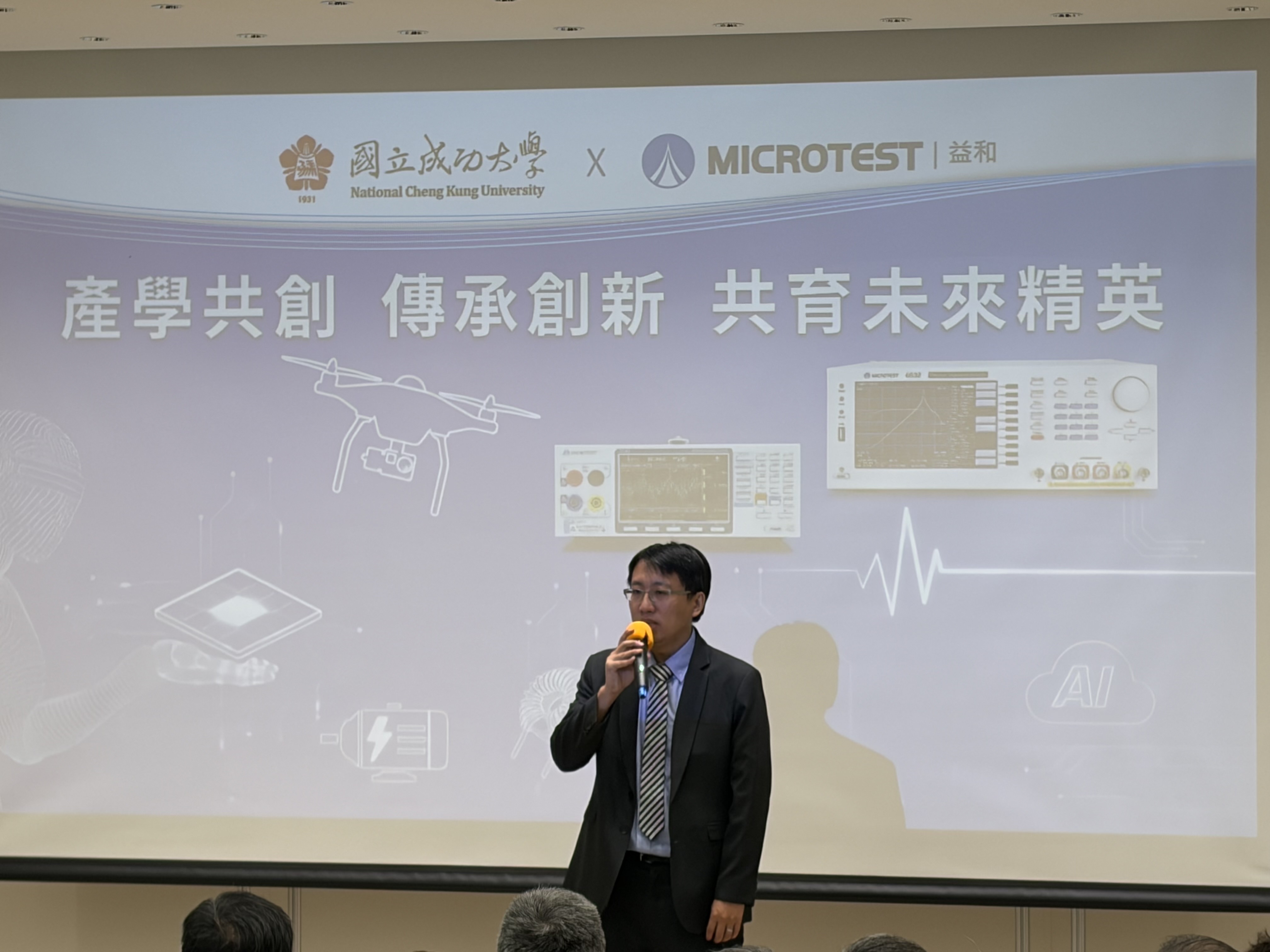
To address the growing demand for advanced engineering talent and precision measurement capabilities in emerging technology industries, National Cheng Kung University (NCKU) and MICROTEST Co., Ltd. jointly established the Precision Measurement Center on October 14, 2026. The inauguration ceremony featured the donation of precision measurement instruments and the signing of a memorandum of understanding (MOU) for industry–academia collaboration. By integrating industrial technology with academic research resources, the partnership brings advanced electronic measurement equipment and practical applications to campus, helping students gain hands-on experience in industrial R&D and cultivating professionals with interdisciplinary measurement, analysis, and system verification capabilities.
This collaboration goes beyond providing equipment and resources, advancing industry–academia cooperation into a new phase of joint technological innovation and talent development. Through the establishment of the Precision Measurement Center, NCKU and MICROTEST will jointly promote the exchange of advanced electronic measurement technologies and applications, strengthen the integration of academic research and industrial practice, and ensure that research outcomes better address real-world industry needs. By bringing industrial expertise and practical experience into the university, the partnership aims to deepen industry–academia collaboration and strengthen the cultivation of future engineering talent.
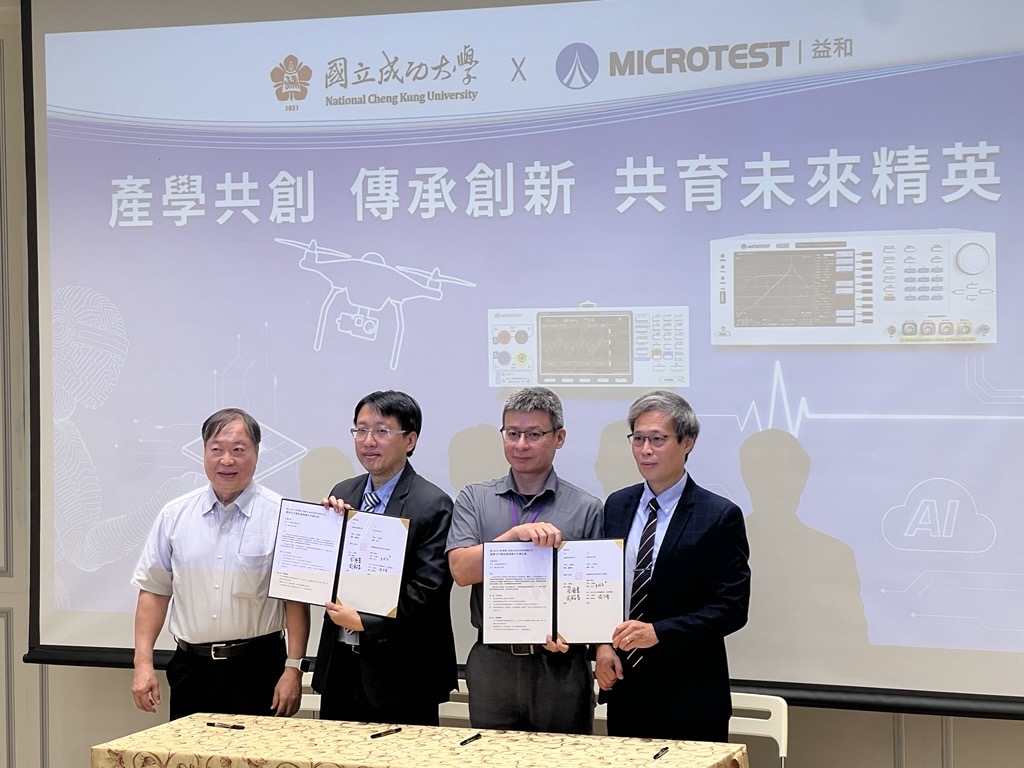
As AI Data Center Power Systems Advance, Precision Measurement Becomes Critical to High-Power Power System Development
Industry–Academia Collaboration Advances Next-Generation Power Technologies and Strengthens Practical Talent Development
As AI data centers move toward megawatt (MW)-class high-power supplies, overall system architectures are evolving toward 800V high-voltage direct current (800V HVDC) and solid-state transformers (SSTs). Power delivery architectures are extending from high-voltage front-end power distribution to high-current power delivery for downstream GPUs, placing increasingly demanding requirements on the power density and current stress of magnetic components.
From high-frequency transformers and inductors in SSTs to Trans-Inductor Voltage Regulator (TLVR) inductors used in GPU power delivery architectures, the saturation current and temperature-rise current ratings of these critical magnetic components directly affect the efficiency and stability of the overall power system. Measurement and verification under actual operating conditions are therefore essential to ensure that magnetic components maintain their electrical characteristics and thermal stability under high-power and high-current operating conditions, while providing sufficient design margin.
Through this industry–academia collaboration, MICROTEST will donate testing and verification equipment for measuring the magnetic saturation and temperature-rise current characteristics of inductors. This will give NCKU electrical engineering students the opportunity to gain deeper insights into next-generation power technologies, including MW-class AI power systems and solid-state transformers (SSTs).
By integrating industry-standard measurement and verification methods for magnetic components into teaching and research, the collaboration will strengthen students’ understanding of power systems and the performance requirements of critical components through hands-on measurement and analysis. Bridging theoretical knowledge with industrial practice, the initiative aims to cultivate engineering expertise that meets the evolving needs of the industry.
Advancing High-Performance Motor Technologies and Strengthening Industry–Academia Collaboration in Drones and Unmanned Vehicles
From Motor Design to Real-World Testing: Industry–Academia Collaboration Cultivates Unmanned Vehicle Talent
As drones continue to evolve toward higher payload capacity, longer endurance, and greater maneuverability, motors have become a critical component in powering drone flight, unmanned vehicle mobility, and the operation of future intelligent vehicles. A motor’s ability to operate reliably and deliver sufficient power depends not only on its design, but also on manufacturing quality during component production and final assembly.
National Cheng Kung University (NCKU) has long been engaged in research on motor design, drive control, and electromechanical integration. In the field of unmanned vehicles, NCKU has accumulated extensive research expertise in sensing, positioning, decision-making, and control technologies. The university also emphasizes the integration of theory and practice, cultivating talent in motor engineering and electrical engineering through teaching and research.
From initial design to actual operation, a motor must undergo numerous tests and verification procedures. The stator winding is one of the motor’s core components. Manufacturing defects that result in insulation failures, abnormal short circuits between coils, or deviations in inductance values can affect motor performance and service life. For motors used in drones in particular, any performance anomaly can directly compromise flight stability and overall system safety.
The performance and quality of a finished motor begin with its stator windings. Through this industry–academia collaboration, NCKU and MICROTEST are bringing industrial practices directly into the classroom, enabling students to go beyond learning motor design and gain practical insights into how motors are tested, what measurement data reveal, and how to identify and diagnose abnormalities.
By integrating MICROTEST’s one-stop motor stator testing system into its teaching programs, NCKU will guide students through hands-on testing of motor windings, including dielectric withstand voltage, insulation resistance, inter-turn short circuits, and inductance measurements. By introducing industry-standard testing methods into the classroom, students will progressively develop practical motor testing and verification skills through equipment operation, measurement, and data interpretation.
Whether students pursue careers in drones, unmanned vehicles, robotics, or other motor-related industries, this hands-on experience will expose them to real-world industrial testing procedures at an earlier stage, helping them develop a comprehensive understanding of the entire process, from design and measurement to verification.
Aligning with Robotics Industry Needs: Industry–Academia Collaboration Enhances Robot Motor Measurement Capabilities
From joint actuation in humanoid robots to precision motion control in intelligent robots, motor performance and electrical characteristic testing have become essential technical requirements. From the winding process to final product application, motors must undergo critical electrical tests, including safety compliance and dielectric withstand voltage, insulation resistance, inter-turn short-circuit detection, inductance, and DC resistance measurements. These tests ensure that winding quality meets design specifications and safety requirements.
Through the donation of a motor stator testing system, MICROTEST aims to bring industrial motor winding inspection practices and expertise into the university environment. This initiative will enable students not only to understand the fundamental principles of motor design, but also to gain practical knowledge of the verification requirements for stator winding electrical parameters, including safety compliance, insulation, and inter-turn short-circuit detection. The collaboration will further strengthen industry–academia exchange and cultivate engineering talent equipped with practical skills.
Focusing on Critical LEO Satellite Components: The Precision Measurement Center Advances High-Frequency Characterization
In low Earth orbit (LEO) satellite communication, navigation, and data transmission systems, stable and precise frequency control is essential for maintaining signal synchronization and communication quality. The resonant characteristics of quartz crystals and piezoelectric components directly affect frequency accuracy and signal stability.
Through the Precision Measurement Center, the introduction of the MICROTEST 6632 Impedance Analyzer enables frequency characterization and equivalent circuit analysis of piezoelectric components, allowing students to evaluate key parameters such as Fs, Fp, and Qm. This hands-on experience will help NCKU electrical engineering students understand measurement and verification methods for high-frequency characteristics at the component level, while developing engineering analysis skills that connect components, circuits, and satellite system applications.
Industry–Academia Collaboration Cultivates a New Generation of Engineers Skilled in Design, Measurement, and Analysis
Through the establishment of the Precision Measurement Center, National Cheng Kung University (NCKU) and MICROTEST are bringing industrial measurement equipment, engineering methodologies, and practical experience into teaching and research. By engaging in hands-on operations, data analysis, and real-world case studies, students will gain an understanding of the complete verification process, from components and circuits to entire systems, further strengthening the connection between theoretical knowledge and industrial practice.
NCKU stated that as next-generation power technologies continue to advance, engineering professionals must possess not only a solid theoretical foundation but also practical expertise in measurement, data analysis, and system verification. The establishment of the Precision Measurement Center in collaboration with MICROTEST will enable students to deepen their understanding of the relationship between theory and engineering applications through hands-on experience, developing practical skills that meet future industry demands.
MICROTEST stated that precision measurement is a fundamental pillar of the electronics industry, playing a critical role throughout product design, research and development, and quality verification. Mr. Chou Ming-Chang, founder of MICROTEST and a distinguished alumnus of NCKU’s Department of Electrical Engineering, has joined forces with his alma mater to donate relevant measurement equipment. Beyond supporting the university’s teaching and research initiatives, MICROTEST hopes to give back to the campus community by sharing its accumulated industrial measurement technologies and engineering expertise. This collaboration will bring students closer to real-world industry requirements and help cultivate engineering professionals equipped with measurement, analysis, and verification capabilities.
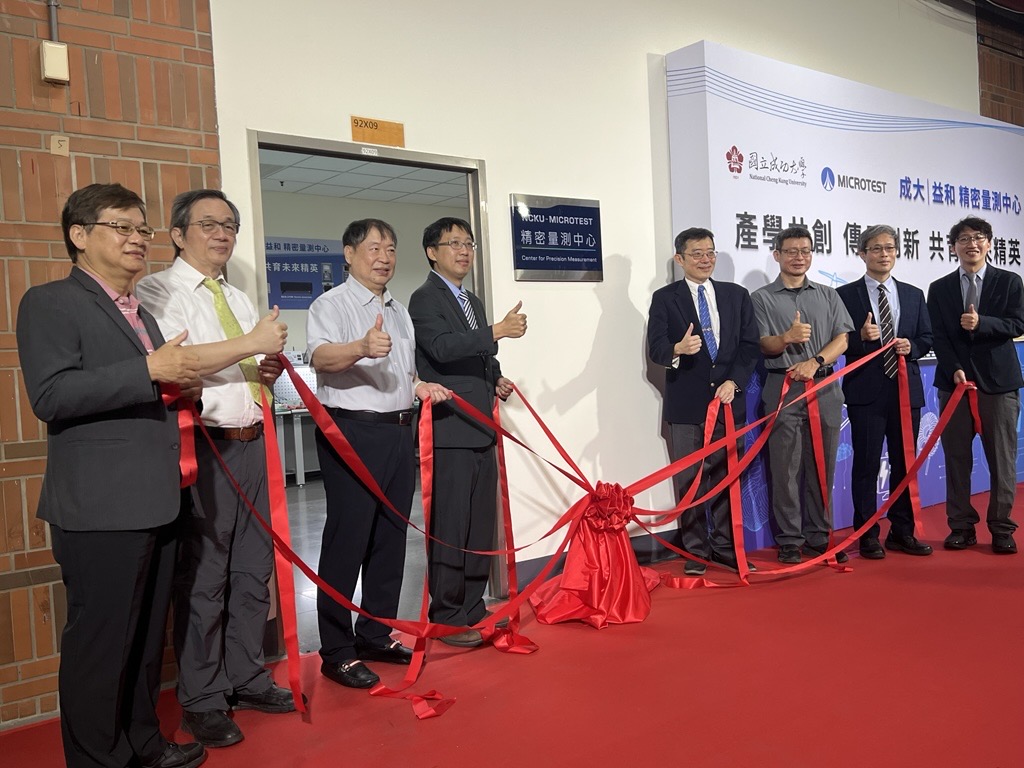
In an era of intensifying global technological competition, Taiwan needs not only advanced semiconductor and electronics manufacturing capabilities, but also a comprehensive talent pool spanning design, materials, components, power systems, control, testing, and verification.
Through this collaboration, National Cheng Kung University (NCKU) and MICROTEST aim to address the shared needs of education and industry, making the ability to “Measure Accurately, Interpret Clearly, Analyze Thoroughly, and Verify Confidently” a core competency for the next generation of engineering and R&D professionals.
Together, NCKU and MICROTEST seek to establish a stronger foundation in engineering talent and technology to support Taiwan’s next phase of development in AI, high-tech industries, and smart manufacturing.
